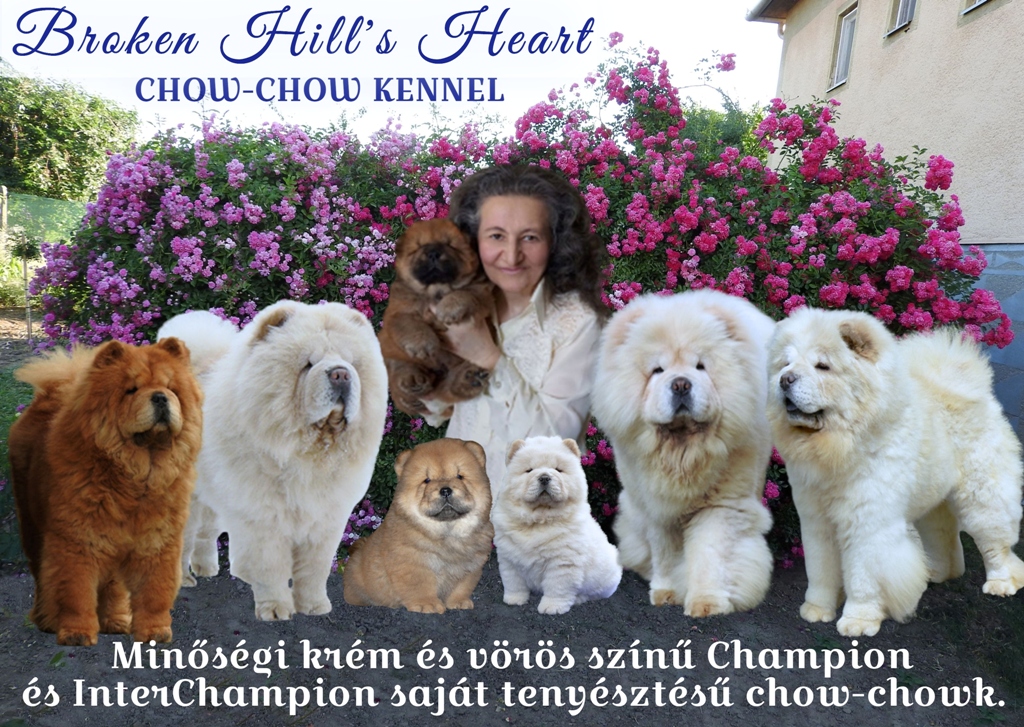
As a devoted Chow lover and responsible breeder of the breed, I have always been fascinated by the Chow-Chow. This regal appearance and noble character breed, with its bear-like head, distinctive lion-mane coat, blue-black tongue, and proud posture, to carry an air of ancient wisdom and dignity. The Chow-Chow is one of the oldest dog breeds, with origins dating back thousands of years to the China’s Han Dynasty according to some sources, while other sources place its appearance much earlier in time.
But what were these majestic dogs originally bred for? The answer lies in their long and varied working past history, which has shaped the Chow-Chow into the loyal, protective, and somewhat reserved companion we know today. From fearless guardians of palaces to tenacious hunters of big game to powerful sled dogs, the Chow-Chow has left an indelible mark on the world of dogs.
An ancient breed of China
The documents attesting to the exact origins of the Chow-Chow were lost in ancient China, largely scattered and destroyed by wars, cultural changes and the erosion of time, but archaeological finds prove that dogs resembling the Chow existed in China as early as 206 BC. Sculptures, paintings and ceramics from the Chinese Han Dynasty (206 BC – 22 BC) depict a massive, spitz-type dog with a thick collar of fur around its head and neck.
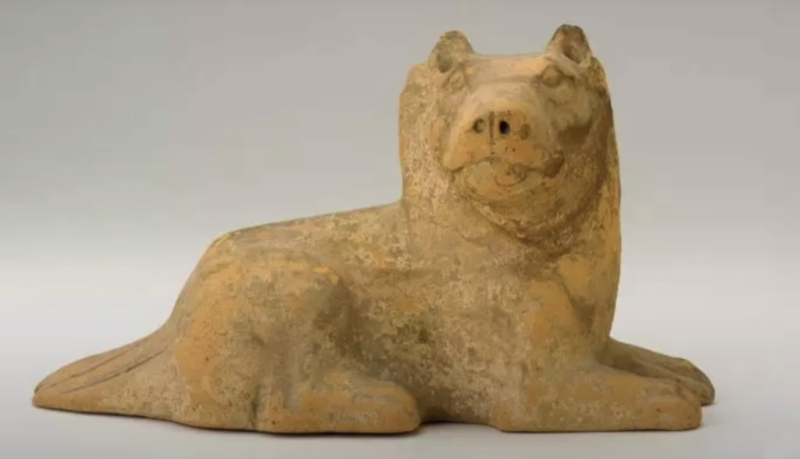
Ceramic statue from the Eastern Han Dynasty (25 – 220) – Source: ChowTales
According to some sources the Chow-Chow’s roots go back to northern China and Mongolia. China was frequently invaded by the barbaric tribes on its Northern borders. These tribes, the Tartars and Mongols, were accompanied by their „war dogs”. The „Tarter war dogs” were described as of „lion-like” appearance, large, powerful and distinguished black tongues. In spite of the destruction of Chinese literature ordered by the Emperor Qin Shi Huang of the Qin dynasty in 213 BCE, numerous references still remain which refer to dogs brought into China by the various barbaric tribes living on the Northern borders and which are either named as the „Foreign Chow” or whose description fits the Chow so accurately.
According to recent research, in southern regions it may have developed thousands of years ago.
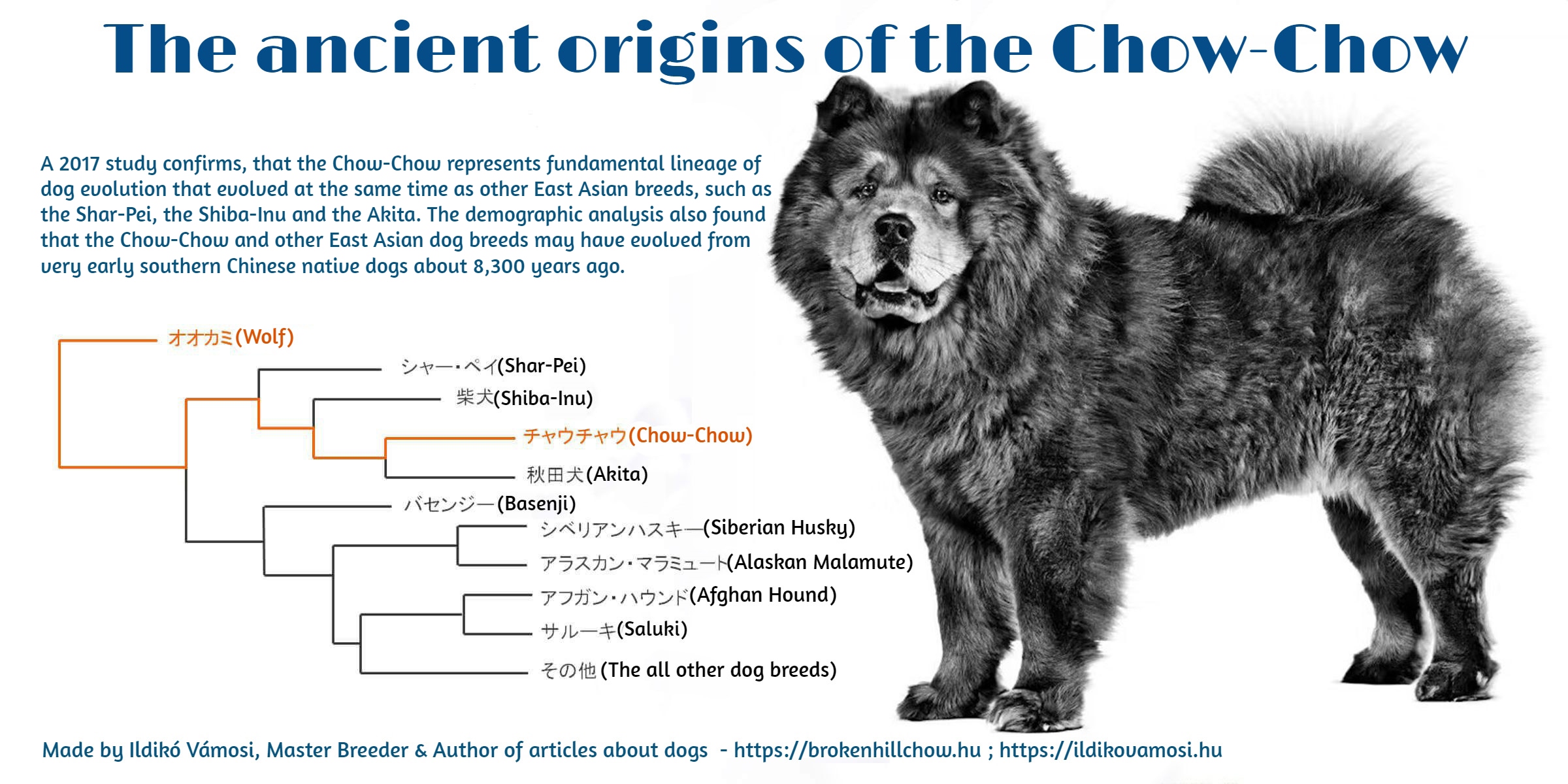
The Chinese native dogs and the East Asian dog breeds such as the Chow-Chow are the closest descendants to the gray wolf. A study published in 2017 used the Chow-Chow as example to conduct a systematic study to map the origins of East Asian ancient breeds. DNA analysis confirmed that the Chow-Chow is one of the first primitive (basic) breeds. Despite characteristics they such as thick fur, which suggest origins in high mountain environments, the Chow-Chows are actually descendants of dogs native to southern China. The authors theorize that The breed’s selection from Chinese native dogs may have been facilitated by the introduction of agriculture near the Yangtze River between 11,000-9,000 years ago, which led to people settlement. The development of the breed was previously thought to have been gradual. However, the researchers found that gene flow between the Chow-Chows and the Chinese native dogs was surprisingly low. This suggests that the development of the Chow-Chow occurred relatively quickly, and that subsequent crossbreedings was limited.
Regardless of their exact place of origin, Chow-Chows also widespread in China, Mongolia, and Tibet, where their strength, toughness, and thick coat made them excellently suited to performing a variety of the demanding works.
Versatile working dog
What kind of work did these early Chow-Chows do? Historical records and accounts paint a picture of an extremely versatile breed that proved its worth in countless areas:
Hunting
With their keen senses, strong jaws, and fearless nature, Chow-Chows were formidable hunting partners. They hunted all kinds of game with them, to hunt everything from pheasants and hares to larger, to more dangerous game such as deer, bears, leopards, and tigers. In the Book of Rites (7th century EC) the „Foreign Chow” was classified as a hunting dog used to attack wolves and leopards. As hunters, the Chow had remarkable scenting, clever tactics, great strength, and speed. This strength is evident in use of the harness shown on the ceramic figurines from tombs of the Han Period (206 BC- 20 AD) where the dog is on a leash attached to a curious kind of body-strap connected by a strap in the front and bound into an iron ring over the back to which the leash is attached and by their very stoutness indicated that the dogs were extremely powerful.
Let’s jump a big leap forward in time, throughout to the golden age of Chinese civilization (618-907). During the Tang Dynasty (618-907), when twenty different emperors ruled in succession, huge dog farms were established, similar to European kennels, where the Chow-Chows and their ancestors lived. According to historical sources, the emperors of the Tang Dynasty had 25,000 pairs of true Chow-type hunting dogs.
The Tang emperor of Yunnan province assigned 10,000 men to look after 5,000 blue-tongued hunters. They hunted everything with them from large game to pheasants and small quail. It was documented that these dogs barked loudly when chasing game, but were silent when confronted with intruders, once biting, not apt to let go them. In the Yunan province, the dogs were used to hunt musk deer and barking-deer (this is the Muntjak-deer), were described as Chow dogs of larger size and weight, very active and sure-footed.
In the 1921 edition book „Dogs of China and Japan in Nature and Art” author V.W.F. Collier describes the use of Chow-Chows in big game hunting, noting their ability to chase down and hold prey until the hunter arrived.
Guarding
The Chow-Chow‘s imposing appearance, deep bark, and natural suspicion of strangers made them excellent guardians. They watched over homes, farms, and livestock, sounding the alarm at any sign of danger.
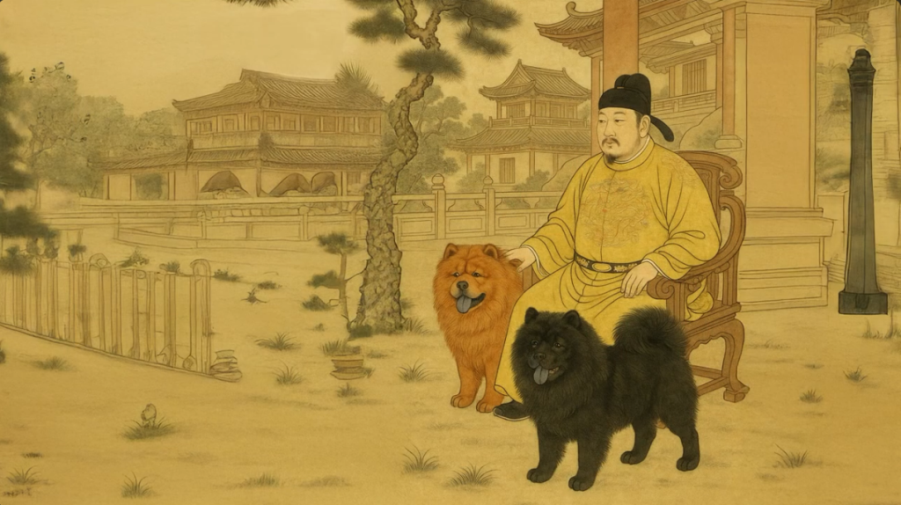
Chows in Imperial China – Source: Chow Chow Africa
In imperial China, Chow-Chows even guarded palaces and temples. The emperors of the era showed deep admiration for the breed and closely moled them into imperial life. During the reign of Emperor Ling Ti (168-190), Chow-Chows were kept in luxurious conditions, surrounded by an army of servants, guarded by soldiers, fed the finest rice and meat, slept on rich carpets, and were given high court titles and honors (K’ai Fu = Viceroy rank). The emperor also bred them. These chows had a dual purpose: to guard the palace and with their dignified appearance to enhance the prestige of the imperial house.
In his book „Dogs of China and Japan in Nature and Art”, V.W.F. Collier, mentioned above, details the work of the Chow-Chow as a hunter and guard dog. He emphasizes that it is a loyal guardian of its village, alert and vocal at night, sleepy during the day. It is brave in defending its home, has a refined sense of smell, and is tireless in hunting.
Herding
With their strong herding instincts, Chow-Chows were used to control and move flocks of sheep and goats in the highlands of Mongolia and northern China. Their bulky coats protected them from the elements during long days out on the range.
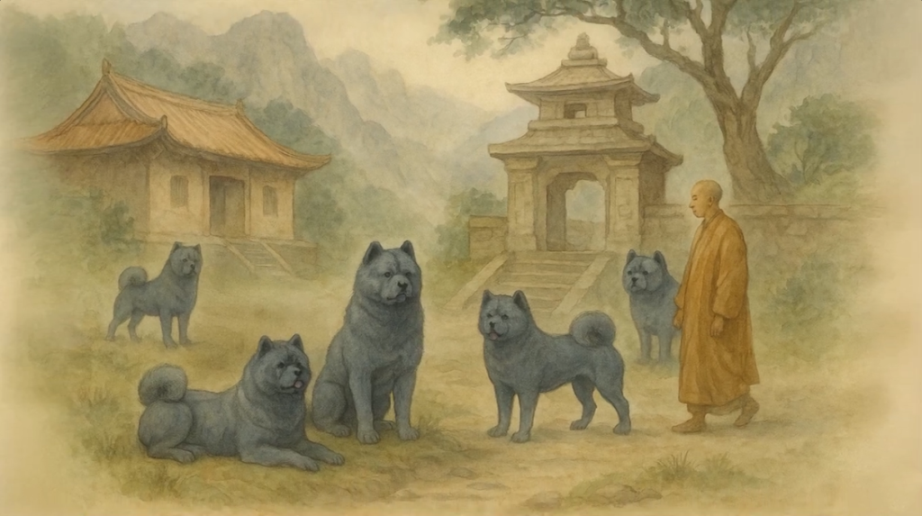
The blue chow-chow dogs of the lama monasteries – Source: Chow Chow Africa
The monks of the Buddhist lama monasteries of Mongolia and Tibet bred blue Chow-Chow dogs. These sturdy, healthy Chows were equal in every respect to their very extensive tasks. In the first place they guarded and protected the monastery and its inhabitants, herded hundreds of cattle, and were excellent hunting dogs, hunting a variety of game from pheasants to bears. The monks continued to breed Chows after the end of the Tang Dynasty, when poverty gripped the nation.
Sledding
The Chow-Chow‘s strength, endurance, and dense double coat made it well-suited to life as a sled dog in Siberia and other cold regions. The renowned exporer Marco Polo during his 13th century travels documented the use of Chow-Chows as sled pulling dogs, further attesting to their adaptability and importance in ancient China. Similar dogs are used for drawing sledges in Mongolia and the Ninguta and Sanhsing districts of Northern Manchuria. „ The Tartar dogs are much valued, and deservedly ; they harness them to sledges which they draw over the snow and frozen rivers.”
Unfortunately, Chow-Chows were also sometimes bred for their fur, which was used to make fur coats, and for their meat, which was eaten in parts of China. However, many Chows enjoyed prestigious positions as companions and attendants to nobles and emperors.
Physical Characteristics
The Chow-Chow‘s distinctive physical traits are a testament to its working history. Its thick double coat, with a woolly undercoat and coarse outer coat, provided insulation against freezing temperatures and protection from rough terrain. The breed‘s sturdy, muscular build and deep chest gave it the stamina and power needed for long days of hunting, herding, and pulling.
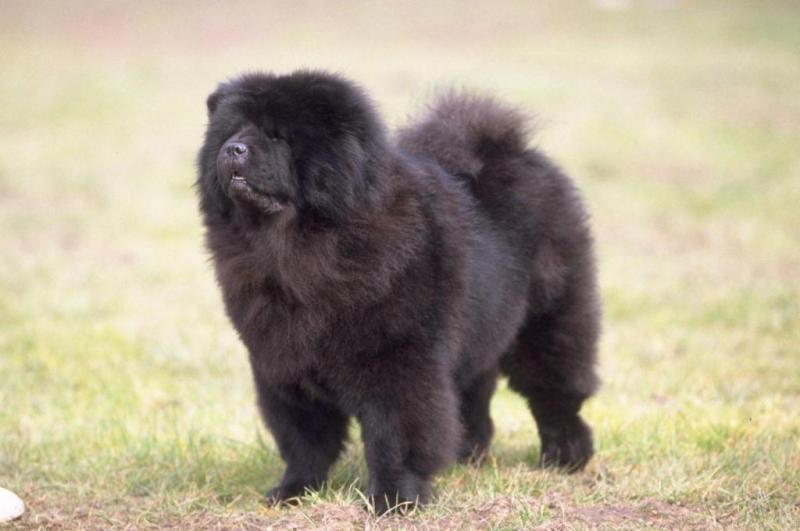
Long-coated black color Chow-Chow – Source: Wallpaper Cave
The Chow‘s unique head shape, with a broad, flat skull and short, deep muzzle, houses a set of strong jaws once used to grip prey and fend off predators. Its small, triangular ears and deeply set eyes contribute to an alert, scowling expression that could strike fear into the heart of any would-be intruder.
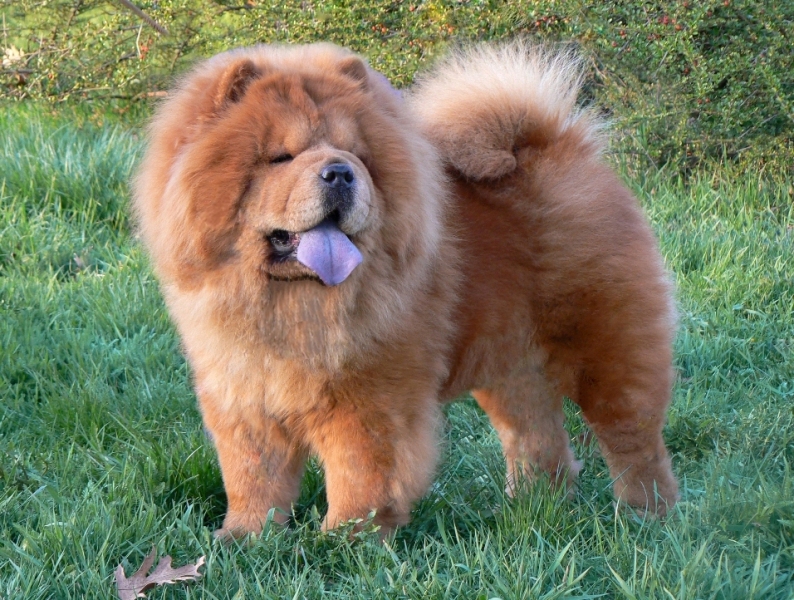
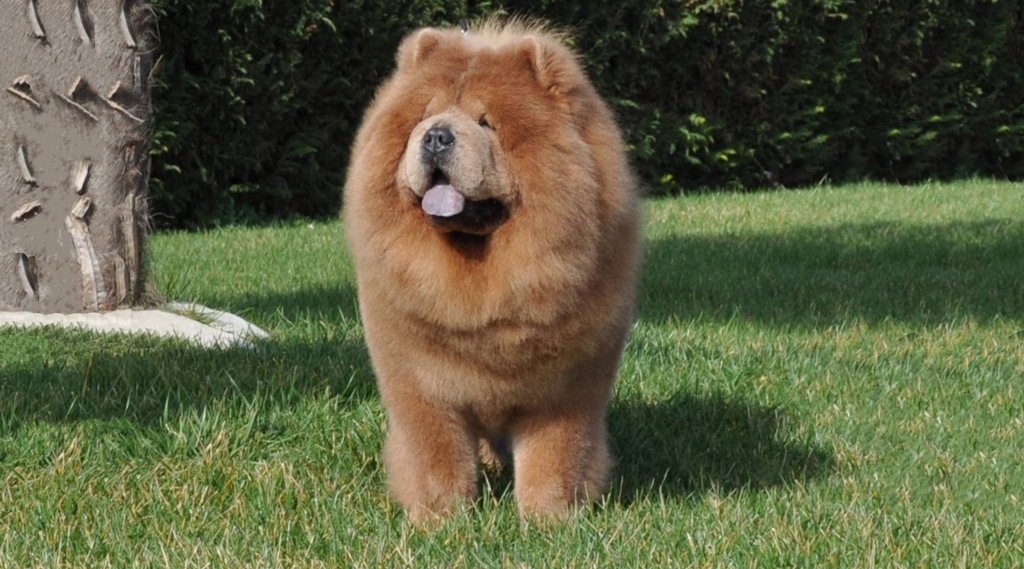
Hungarian Champion, Hungarian Grand Champion Broken Hill Effi red female from the Broken Hill’s Heart kennel.
And of course, there’s the Chow-Chow’s most famous feature, its bluish-black or purple tongue (often use the word „purple” as well.). The breed shares this physical characteristic with only one other dog, the Chinese Shar-Pei.
The bluish-black colour of a Chow-Chow’s tongue, lips, gums and palate is caused by an exceptionally high concentration of melanin accumulating in the tissues of the tongue and mouth. This is a natural genetic characteristic of the Chow-Chow, as well as one of its oldest and most defining features.
Chow-Chow puppies are born with pink mouth pigmentation. During the first six weeks, the tongue gradually turns bluish-black, and the pigmentation of the mouth also becomes darker. It can take up to 18 months for the pigmentation of the gums and oral tissues to reach its full and final colour depth.
If pink spots remain on the tongue, this indicates a genetic defect. This defect excludes the dog from the show ring, and since this genetic defect is inherited, individuals with a spotted tongue cannot be used for breeding.
According to our current knowledge, the gene determining tongue colour has no direct genetic link to the genes determining coat, nose or eye colour. The same applies to the gene determining lip colour.
Temperament and Personality
The Chow-Chow’s work as a hunter, guardian and herder has greatly influenced its temperament. Chows are known for their independent, somewhat aloof nature. Although they are extremely devoted to their families, they can be reserved and even suspicious of strangers, a trait left over from their time as palace guards and protectors. This behavior is part of their nature and serves as a defense mechanism. To promote positive interactions, it is important to introduce them to new people gradually and in familiar surroundings. With time and patience, they can develop trust and bond with people outside their immediate environment.
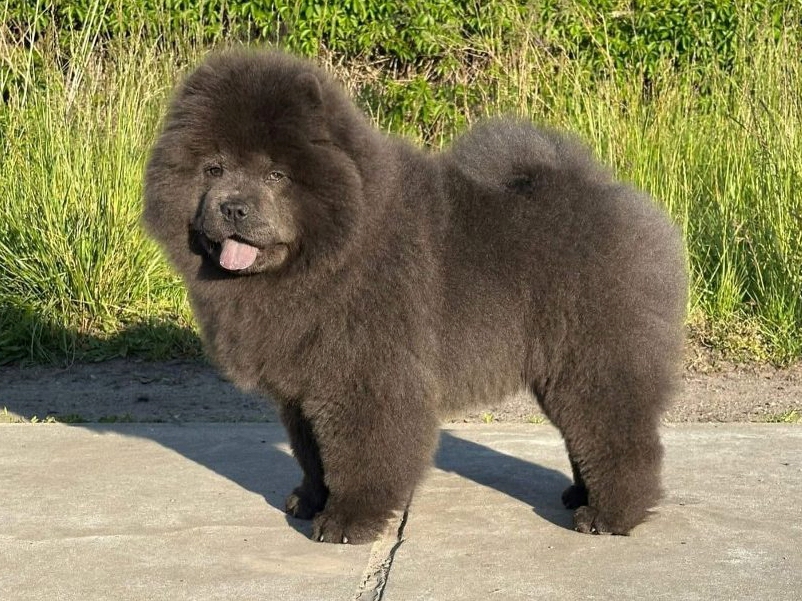
Balcsi-Blue Defkalion blue puppy male from the Balcsi chow kennel. Breeder is Borbála Tóth-Papp.
Because Chow-Chows are pack animals, have a strong sense of hierarchy, and may try to assert their dominance, early socialization and good training are essential. They should be trained from the age of a few weeks, as they have a very strong will and dominant personality.
The Chow-Chow has a well-deserved reputation for being a fierce protector of its owner, family, and home. Their protective instincts, combined with their powerful build and deep bark, make them excellent deterrents to intruders. With proper training and socialization, the Chow-Chow will learn to distinguish between a real threat and normal social interaction.
Like many spitz breeds, the Chow-Chows have a tendency toward independence, which can sometimes be accompanied by stubbornness. They are intelligent problem solvers, but they will never please their owner in the same way as, say, a golden retriever. Due to their independent nature, they do not always obey commands, but rather consider whether what their owner asks of them is good for them.
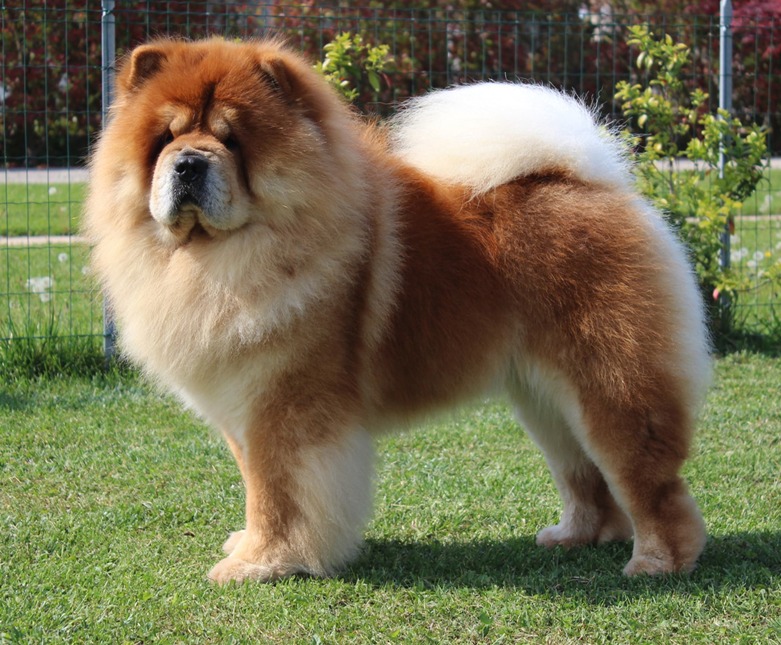
Multi Champion Antonio Banderas For Nanni With Love red boy from the Notorius Star kennel. Owner is Nanni Rosolia.
The Chow is a powerful, majestically beautiful animal and they know it about themselves. They expect to be treated with dignity and respect, which they will return if we prove that we are worthy of it! Training a Chow-Chow requires patience, love and confidence, while werespecting their intelligence and setting clear boundaries. Positive reinforcement and consistency are the keys to successful training.
Despite their independent nature, Chow-Chows are incredibly loyal to their family, being very devoted, watchful and protective. They tend to form a particularly close bond with one chosen member of the family, whom they consider their true master. They are not typically fawning or overtly affectionate dogs, but rather express their loyalty through quiet companionship. This unwavering loyalty reveals a truly deep bond.
The Chow-Chow can do well in families with children, if it raised together with them, but does not tolerate overly rough play or mistreatment of young children. For families with older children, who understand proper dog care, the Chow-Chow can be a good companion.
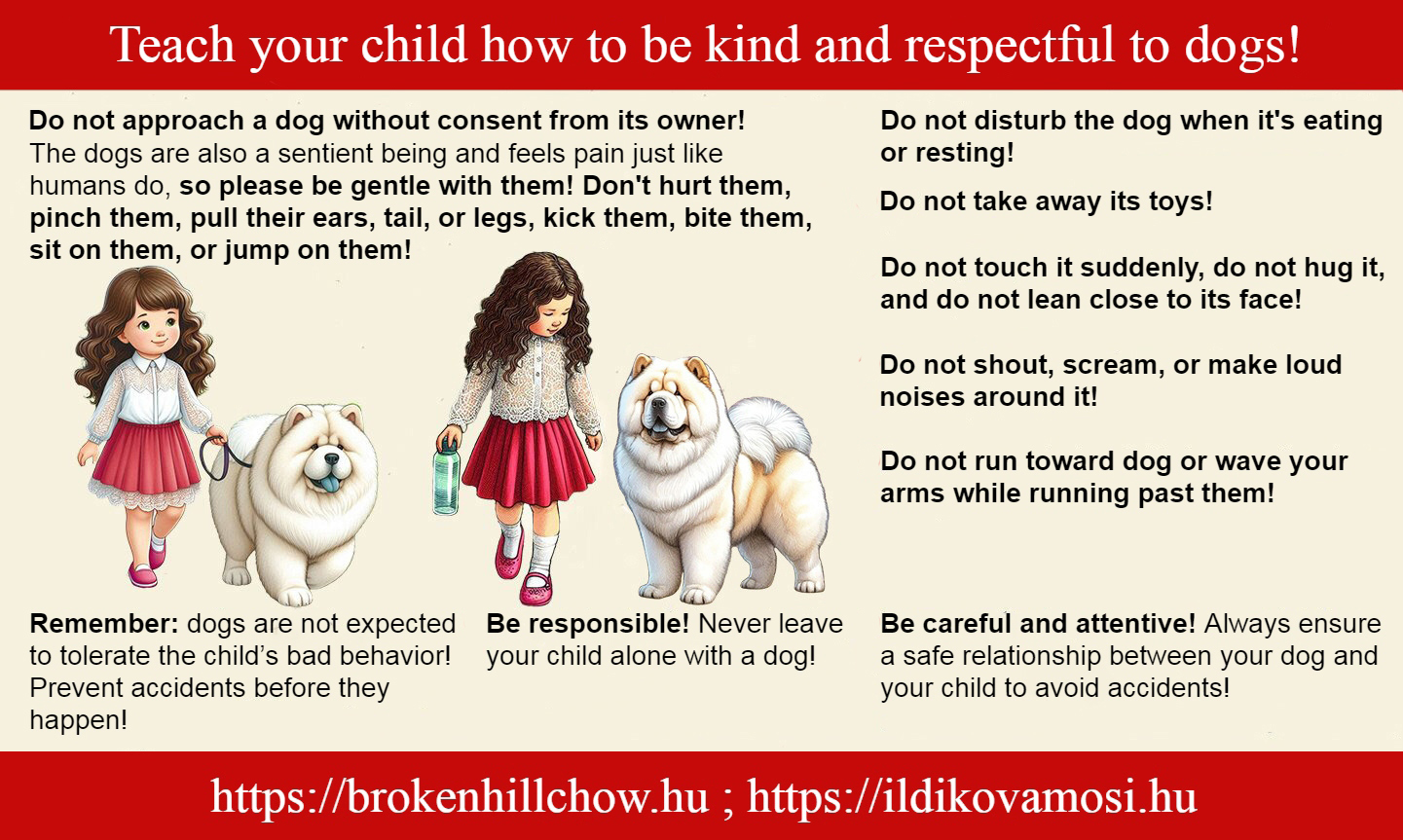
As with any dog, it is essential to teach children how to approach and behave around the Chow-Chow. It is important for parents to always supervise the joint activites, that to prevent possible incidents such as ear biting or pulling, either by the child or the dog.
Health and Lifespan
As with many purebred dogs, chow chows can be prone to certain health issues, some of which are related to their conformation and history. These include:
Hip dysplasia
The most common hereditary disease of dogs, affecting about 40% of them. It occurs in all breeds, but it is most often manifested in clinical symptoms in medium and large dogs. Joint laxity is the most important risk factor for hip dysplasia. Depending on the degree of joint laxity and predisposing factors (nutrition, exercise), the process damages the hip joint and usually leads to the development of bone lesions that can be detected by traditional X-ray examination after months or years. Individuals with hip dysplasia should be excluded from breeding so that the disease cannot be passed on. Hip dysplasia also occurs in chows, so it is important to draw attention to the importance of screening! The chance of a chow having hip dysplasia is significantly reduced if the puppy is purchased from a breeder whose breeding dogs are screened for hip dysplasia! Important information for new owners is that in the first year or one and a half, a chow puppy/youngster should avoid climbing a lot of stairs, jumping into or out of the car, jumping, jumping on or off the bed or sofa, all of which can increase the risk of developing dysplasia! Also, fast turning, spinning, and spinning around are not good! A well-built body is something that comes from excellent breeding and the new owner’s proper knowledge – both, not just one! In addition to the right amount of daily exercise, proper feeding (quantity & quality) is equally important! You should never overfeed your Chow-Chow, as this can damage its joints!
Patellar dislocation
A dog’s kneecap, also known as the patella, is similar to a human kneecap. Patellar dislocation is mostly hereditary, but in a small percentage of cases it is the result of a bad move. A dog with a sprain will usually stop while running and suddenly start crying in pain. The affected limb will be extended backwards and for a while will be unable to bend it back to its original position. If this problem is not treated, the kneecap cartilage will wear away and the dog will limp more and more. The inflammation will affect the joints, causing the knee to swell and the animal’s mobility to deteriorate.
Ligament/cruciate strain/tear
As with any breed of dog that jumps or turns suddenly and quickly, ligament strain or tear can occur in Chow Chows. In such cases, the dog will limp on the injured hind leg or will not step on it at all. This condition requires fast medical attention!
Entropion
Inward turning of the eyelid margin, which is hereditary. The Chow’s deep-set eyes are prone to this condition. The hairs on the eyelid margin cause local irritation due to the inward turning, which is associated with corneal pain and increased tearing. It can also result in conjunctival redness, corneal clouding, ulceration and, in severe, neglected cases, perforation of the eye. The inverted eyelid irritates the eyeball or cornea with each blink, causing significant pain to the dog, who squints almost constantly and has a discharge from the eye. It can affect the lower or upper eyelid, or both at the same time. In severe cases, it can appear at an early age, when the puppy is 2-3 months old. The turned-in eyelid can be corrected with surgery, but it is actually the ophthalmologist veterinary who decides when the surgery can be performed at the earliest.If the ophthalmologist considers it necessary, they will wait with the surgery until the entire facial development is complete. In addition, the dog’s eyes may water frequently if there is a blocked tear duct, or if the weather is windy or the dog is stressed.
Allergy (Flea/Food/Environmental/Contact/Inhalative)
An allergy is the body’s hypersensitivity to certain substances, called allergens. The most common types of allergy are flea allergy (flea bites and flea saliva), food allergy (to food ingredients) and inhalant (inhalative; pollens, trees, weeds, house dust mites, mold spores). Food and environmental allergies are the most common in Chow-Chows. Regular grooming and a quality diet can help manage allergies.
With proper care, the average lifespan of a Chow-Chows are 10 – 12 years, and less commonly, they can live for 13 – 16 years.
Popularity
The Chow-Chow has enjoyed great popularity over the centuries. Chinese nobles and emperors already loved them during the Han Dynasty (206 BC – 22 AD), and in the 1800s, they became popular pets in Europe and in America, and in the 1900s they became popular pets in Hungary as well.
The first chows arrive in England
The first Chow-Chow dogs arrived in England in 1780, when an officer of the East India Company brings in a pair of chow-chows, since he falling in love with the breed at first sight.The Reverend Gilbert White, in his book „The Natural History and Antiquities of Selborne” (1789), mentions this gentleman who „..brought home a dog and a bitch of the Chinese breed from Canton, such as are fattened in that country for the purpose of being eaten … with coarse bristling hair on their backs … their hind legs were unusually straight without any bend at the hock or ham, to give them an awkward gait when they trotted … their eyes were jet black, small and piercing; the inside of their lips and mouths of the same colour as their tongues blue.” His observations provided one of the first detailed accounts of the breed’s unique traits.
We had to wait 40 years to find traces of it in the press. An English newspaper account of May, 1820 concerned with exotic wild animals imported from China, Japan and India mentions an easterm dog that has a thick red coat and a blue-black tongue which attracted widespread attention. In 1840, a newspaper article in the United Kingdom reported on several exotic dogs from abroad that were exhibited at the Zoological Gardems of London’s identified them as „Chinese Wild and Edible Dogs”. Their coats were black, red or blue, and long and short-haired.
In the 1840s, Queen Victoria, who was known for her love of animals, kept three Chinese dogs, it is not known whether they were Chows or not. What is known, that in 1865 Queen Victoria was given several Chow Chow dogs as a gift from China, were kept in cages at a royal kennel at Windsor. This was the beginning, that the breed catching the English nobility and the public’s eye.
The first Chow-Chows in spotlight of the English dog shows
But an interested in Chows for breeding and exhibition must have begun in 1879 when a smooth-coated black chow bitch named Chinese Puzzle came to England. The following year she was exhibited in the „Foreign Dogs” class at the Crystal Palace dog show by her owner Mr. W K Tauton.
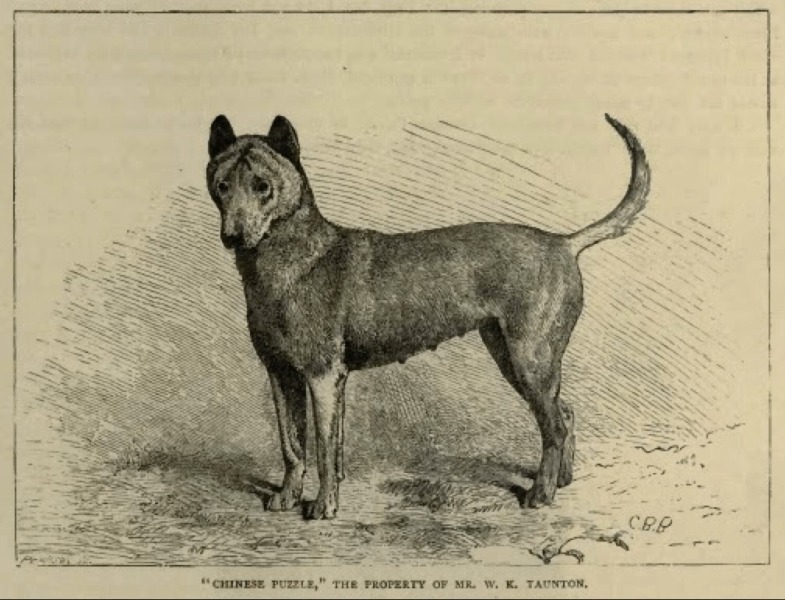
Chinese Puzzle smooth-coated black female. Owner is Mr. W.K. Taunton.
What’s remarkable is that despite the absence of an official chow class, she was still awarded a medal. This recognition was not just a triumph for Chinese Puzzle, but a landmark moment making the chow’s first steps into the dog show limelight. In 1881, a year after the introduction of the Chinese Puzzle, the Prince of Wales (later King Edward VII) exhibited his Chinese imported dog named „Chang” at the Royal Dog Show in Dorchester, which he handled. It’s fascinating to think that someone of such high status was directly involved in promoting the breed.
In 1893 the breed was given its own class at the dog show held in the London Aquarium, having previously been in the „Foreign Dogs” class. In 1894, the first Chow-Chow was registered in England, and in 1895, the first club was establish „The Chow-Chow Club” under the name.
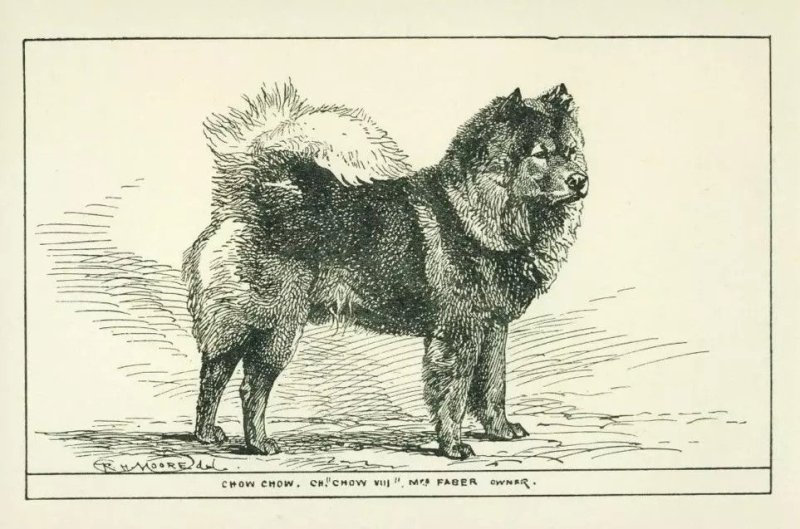
The male imported from China, Chow VIII, which served as the basis for the breed standard.
The club’s first meeting was held on 01th July of1895 in the Carlisle Mansions. At this club meeting, the first thing the members discussed was the „proportion of Chow-Chow characteristics,” that is, they were the draw up the breed standard, which was based on the premier Chow at the time, Chow VIII, a red male imported from China. In December of 1895, they organized the first club show, which was held jointly with the Schipperke Club. The Chow-Chow Club’s founding camp of 25 members has grown many times over in more than 100 years. Breeders of who maintain the purity of breeding in exemplary according to the standard aim to prioritize healthy dogs in breeding.
The Chow-Chow’s first steps in the United States
The Chow-Chow became popular in the United States at about the same time that they were gaining respect in England. According to the records of the American Kennel Club, the first Chow-Chow to be shown at the Westminster Dog Show was Takya, entered by Miss A.C. Derby in 1890 and placed third in the show.
In the early 1900s, Mr. Charles E. Proctor and his wife played a key role in introducing the breed to America and founded the Blue Dragon Kennel. The kennel’s founding dog was the champion Chinese Chum, a son of the famous English sire Shylock.
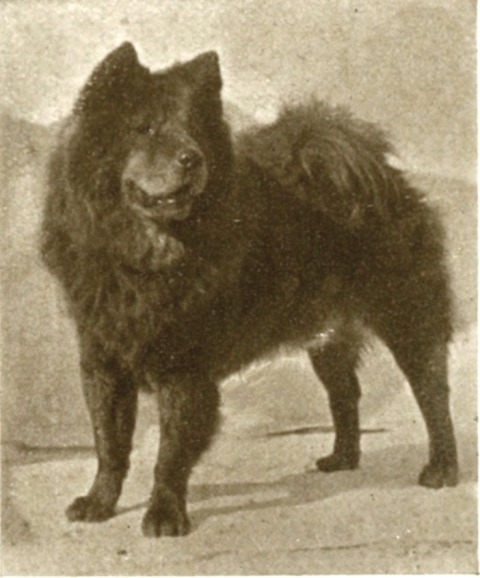
Chinese Chum, the most influential stud dog of the era, sire of numerous champions.
In 1905, Mrs. Proctor’s Chow, Chinese Chum, won the first American show specifically for Chows. Chinese Chum was one of the most influential stud dogs of the era, siring many champions and winning the Best of Breed award at the Westminster Dog Show in 1906. Today he is still considered the father of the breed in America.
In 1901, Dr. and Mrs. Henry Jarrett purchased their first Chow-Chow, a dog named Yen How, from China through a San Francisco exotic pet dealer. They then imported six or seven more Chow-Chows from China to establish the Chestnut Hills kennel in Philadelphia, the first Chow-Chow kennel on the East Coast. They bred the country’s first Chow puppies. Yen How won first place at the New York Dog Show, the Westminster Dog Show, the Philadelphia Dog Show, the Atlantic City Dog Show, and numerous other dog shows. Mrs. Jarrett founded the first American Chow Kennel and got recognition for the breed from the „American Kennel Club”.
1906 – a key year
1906 was a true turning point for the Chow-Chow breed in the United States. It was the year that the American Kennel Club officially recognized the Chow-Chow breed. In addition, the first American Chow-Chow standard was created in 1906, based on the original English standard, ensuring the preservation and uniformity of the breed’s characteristics on both sides of the Atlantic. Another exciting development was the formation of the American Chow-Chow Club in 1906. The first president was the Belgian Montglyon Princess. The club is now called the Chow-Chow Club Incorporated.
The breed’s popularity soared in the 1920s
In the 1920s, the American Chow-Chow Club held its first national specialty show. At that time, national shows typically featured over 100 Chows, so it was time to hold a breed show. At the first breed show, out of 198 Chows, a dark red dog named Ning Poo won the Best Of Breed title.
It is thanks to the 30th president of the United States and his family that the breed came into the spotlight. Calvin Coolidge was president of the United States from 1923 to 1929. Throughout their time in the White House and beyond, the Coolidge embraced an asonishing variety of pets, from dogs and birds to wombats. The family also owned two Chow-Chows.
The first was a dark red dog named Tiny Tim, which President Coolidge received as a gift and which was born on the same day as him. Tim was a bit of handful, but that didn’t stop the Coolidges family from taking him everywhere with them. No vacation or front porch was complete without the mahagony red Tim by their side. And then there was Blackberry also, who was a black puppy, and who was a gift they received on their vacation in South Dakota. President Coolidge eventually gave the dog, who barked at the trees, the moon, and everything else, to his son’s fiancée, Lawrence Trumbull, who happily welcomed him into her home. And so the fad begins. Tiny Tim and Blackberry, the chows of President Coolidge, turned heads and steered a national craze. According to American Kennel Club statistics, the Chow became the second most popular dog breed of all time in the 1920s. You can see many archival photos of the Coolidge family and their Chow-Chow dogs in the ChowTales archive.
The Chow-Chow has become a status symbol
Every major dog show results are printed in the New York Times. That’s how important they were. The public wasn’t just curious. They were enchanted, addicted. The excitement was palpable, and it launched the breed to dazzling heights of popularity. On the boardwalk, down busy streets, in nearly every automobile, you would see a proud Chow turning heads. They were the ultimate status symbol of the times. That was the spirit of the age. Glamorous, chaotic, irresistible.
The breed has gone through two periods of popularity in the United States. One was in the 1920s and 1930s, as previously mentioned, and the other in 1986, when the Chow-Chow became the 6th most popular breed with 43,026 registered dogs per year, according to the American Kennel Club. Unfortunately, the second period of great popularity did not last long, and between 2012 and 2021, the breed only ranked between 70th and 80th on the list. In 2022, it ranked 92nd out of 199 dog breeds. In 2023 and 2024, it ranked 88th out of 201 dog breeds. While in 2025 it ranked 94th on the list of 205 dog breeds. The Chow-Chow’s popularity may have declined due to the spread of designer mixes. Another possible reason for the decline comes from a list compiled by the U.S. Centers for Disease Control and Prevention in the late 1990s. The list attributes 238 dog bite deaths to Chow-Chows between 1979 and 1998. Some insurance companies have penalized homeowners, who own the breed by excluding them from insurance system. Despite this, the breed still has a large following in the United States today.
Being ignored of the short-haired Chow-Chow
Unfortunately, although the 1906 and 1925 standards provided for shorthairs, they were very unpopular in America and were omitted when the 1941 standard was rewritten.
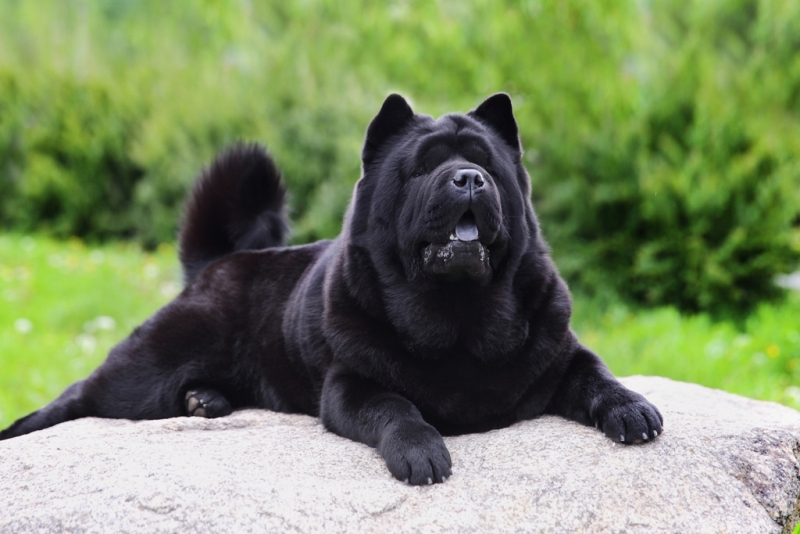
A short-haired black Chow-Chow – Source: Shutterstock
Thanks to a handful of dedicated shorthair breeders, the shorthair was finally reinstated in the standard in 1986 after a 45-year absence. When the shorthair was removed from the American standard, much of the limited gene pool was still in Europe. After being re-accepted in America, the shorthair breed has undergone a wonderful resurgence and continues to grow.
The journey of the Chow-Chow to Hungary
The first Chow-Chow specimens arrived in Hungary around the turn of the century. His Majesty gifted four specimens to the Budapest Zoo and Botanical Garden, which were presented at the 1902 Budapest Dog Show. Several contemporary newspapers reported on this, for example, the 01th April of 1902 issue of Magyar Nemzet wrote: „At the 1902 Budapest dog show, the attention of the dog-loving community was once again focused on the Zoo. In addition to several dogs for sale, the institution debuted a breed that had not been seen in Hungary before. The zoo, as a dog breeder, also presented four Chinese Chow-Chows (gifts from His Majesty).„
At the later exhibitions appear only occasionally did Hungarian-owned Chow-Chows. The National Hungarian Dog Breeding Association organized a dog show in Budapest on 23th and 24th May of 1914, in the Tattersall’s indoor hall. „Among the dog breeds, the very handsome-looking, brownish, thick-haired Chinese spitz, the Tsau-Tsau (Chow-Chow), is worth mentioning,” writes the 30th May of 1914 issue of the Veterinary Journal. The cynology column of issue 14 of the „Hunting and Animal World” magazine published a longer report on the same exhibition, according to which „the two Chinese Chow-Chows, especially one owned by Prince Miklós Esterházy, presented at the exhibition are beautiful specimen.”
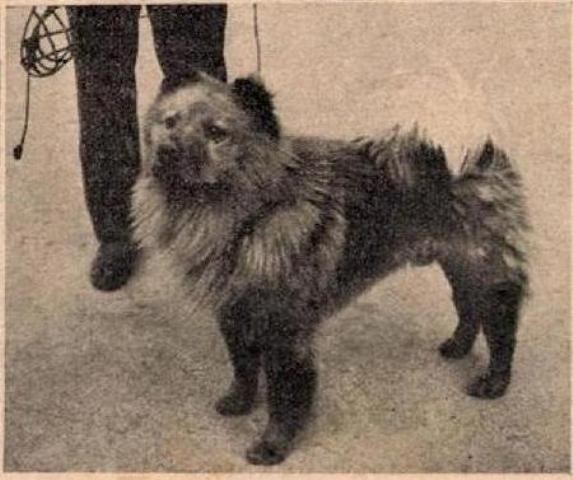
Tschaudi, Prince Miklós Eszterházy’s Chinese Spitz dog in 1914.
The breed’s population began to increase in Hungary in the 1930s, although even then it was considered an extremely expensive and rare breed of dog. „There are perhaps four Chow-Chows in the whole country. Their owners jealously guard them and make sure that the breed does not reproduce too much, so that they can boast that such a dog is almost as rare as the white raven. Its value is 500 – 600 Hungarian Pengo theoretically, because it is not very easy to get one”, reads the 8th September of 1934, issue of the daily newspaper „Ujság”.
„The Chow-Chow is very fashionable in England today, and already have a few examples of this breed in the Country. There is no doubt that many people are interested in this breed, and it is certain that it will become the fashionable dog in the near future. The Chow-Chow is the dog of the future at Hungary,” wrote Budapesti Hírlap in an article on 9th April of 1933.
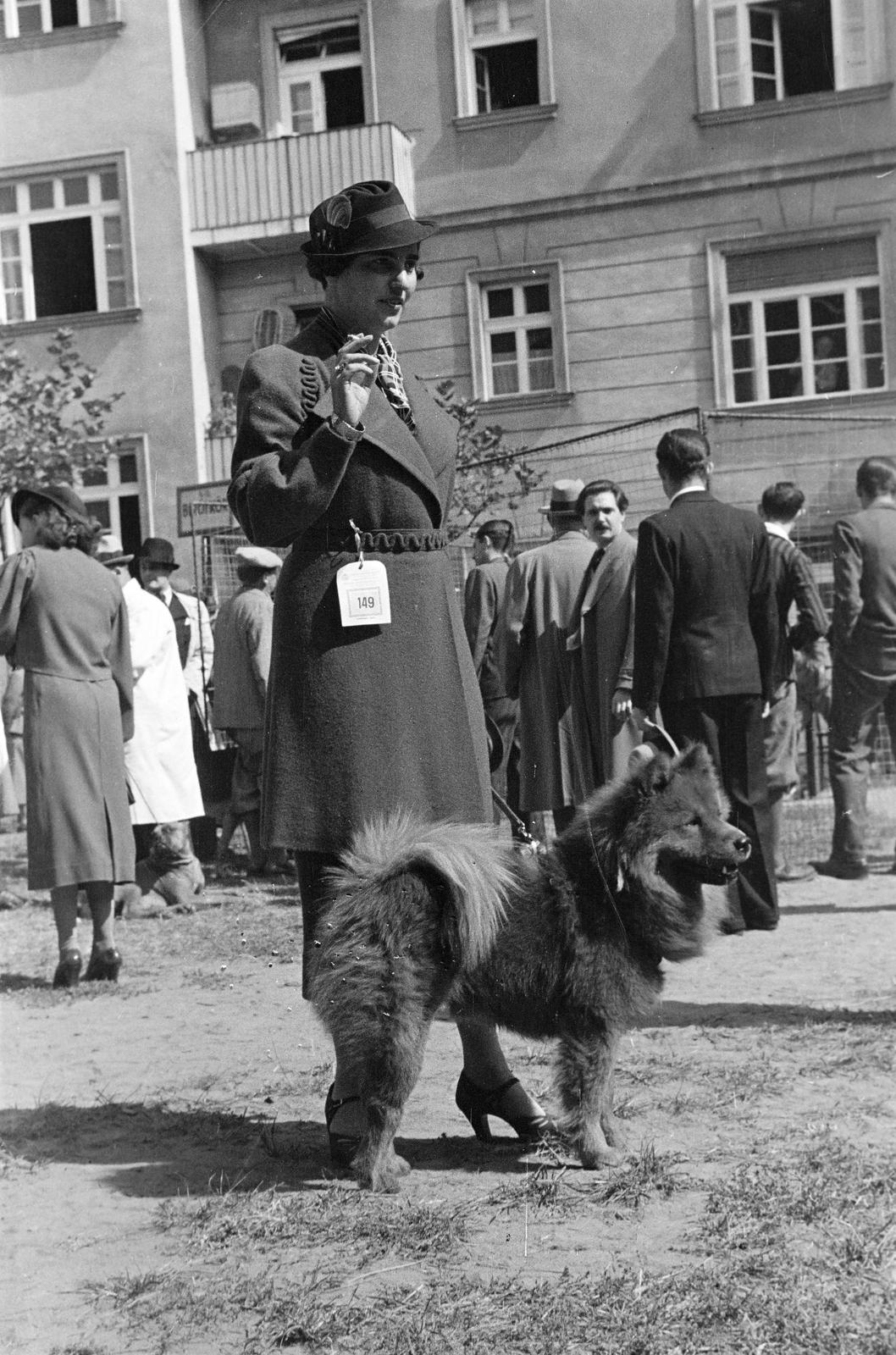
13 September of 1936, Budapest CACIB and Derby dog show – CACIB, Hungarian Derby winner chow-chow: Pu Yi, Owner: Dr. Rudolf Sadnik and his wife; Photographed by Fortepan / Tibor Inkey.
This is how the breed began its journey of conquest in Hungary. A few years later, their number multiplied, and their value doubled. The history of the Chow-Chow in Hungary from this period onwards is quite manifold, so I will be writing a detailed series of articles about it in the near future.
Currently, the number of Chow-Chows living in the country is not specified, only estimated. In the spring of 2023, the Hungarian Veterinary Chamber (MÁOK) published statistics on the number of microchipped individuals of each dog breed. The MÁOK collected the data from the PetVetData microchip registration system, according to which the number of microchipped Chow-Chow dogs in the database with the end of 2022 was 16,557. In 2024, based on the Hungarian Kennel Club registry data, the Chow-Chow was in 48th place on the popularity list of 195 dog breeds, beating out the Samoyed, Akitas, Alaskan Malamute and Siberian Husky from its group.
Famous owners
Among the Chow-Chow lovers and owners, we can find royal and noble families, politicians, scientists, artists, movie stars, and well-known people from countless fields of life. They are all devoted to their unforgettable companion, the Chow-Chow. Since there are so many of them, it would be impossible to introduce them everyone in this article, so I have selected four famous people, scientists, and artists from among them.
Sigmund Freud
To the father of psychology, to Sigmund Freud (1856 – 1939) during the last 10 years of his life had three beloved Chows, but he spent the most time with his dog named Jofi.
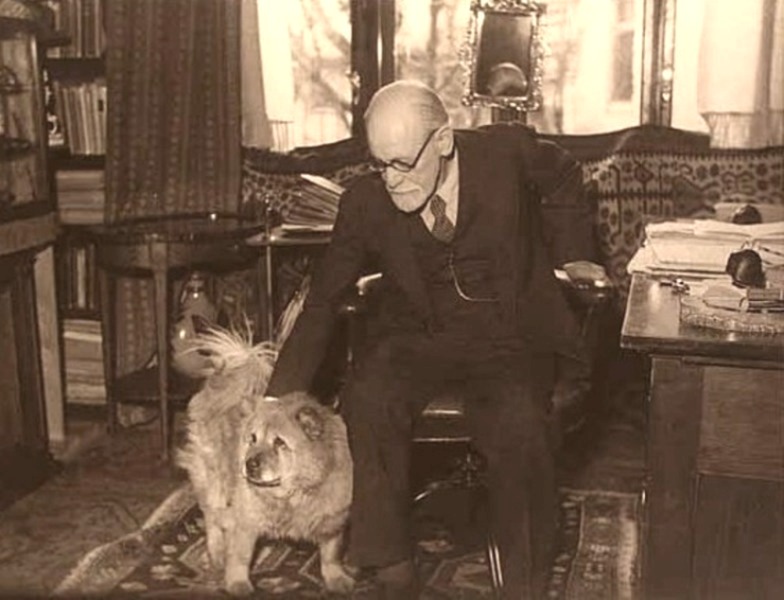
Sigmund Freud in her study with her beloved Chow-Chow dog, Jofi.
Jofi regularly participated in Freud’s therapeutic sessions with his patients, mainly because the patients opened up much more easily and were more willing to talk about their problems. Freud felt, that dogs had a special sense that enabled them to accurately judge the character of the patients. Jofi even signaled the end of the therapy session by walking to the door, so Freud never had to look at his watch. Many of the things, what Freud discovered about the effects of dogs during psychoanalysis were beneficial to his patients and to himself. Through his dogs, Freud recognized the values they held within them, such as purity and genuine love.
Georgia O’Keeffe
Georgia O’Keeffe (1887 – 1986), one of the most important American painters women of the 20th century. An interesting fact with Hungarian implications is that her maternal grandfather, George (György), was a Hungarian immigrant, from whom Georgia received her first name. Although she worked as also an art teacher and interior designer during her life, she is primarily known for her paintings, in which she combined abstraction and the depiction of landscapes. Her works are highly sought after in the art trade, among female artists, one of Keeffe’s paintings has fetched the highest price ever paid at auction. In Christmas in 1953 Georgia O’Keeffe was gifted two Chows puppies, Bo and Chia. Georgia loved her Chow-Chow dogs, fondly referring to them as “little people.” She went on to own six Chows in her lifetime! The black and white photo was taken in 1972 below of the artist women and her chow-chow dog.. The title of the photo is: Georgia O’Keeffe with Chows. It was taken by Doris Bry.
Lilian Disney és Walt Disney
Walt Disney (1901 – 1966) and his wife Lilian Disney (1899 – 1997) were also happy Chow owners, and their story is a fairy tale. Lillian and Walt were married on July 13, 1925. Soon after, they bought their first home in Los Angeles. Once they moved in, Walt suggested to Lilly that they get a dog, but Lilly didn’t want to. Walt bought a book about dogs and read it often, showing Lilly different breeds, trying to figure out which one she would like. Lily finally decided on a chow-chow. The next day, Walt went out and bought a chow-chow puppy, but kept it a secret until Christmas. While Walt and Lilly were celebrating Christmas Eve with the family, Walt smuggled the puppy into a hat box, decorated it with a big bow, and slipped it under the Christmas tree. Lilly received the box, and when she untied the ribbon, a puppy emerged from it.
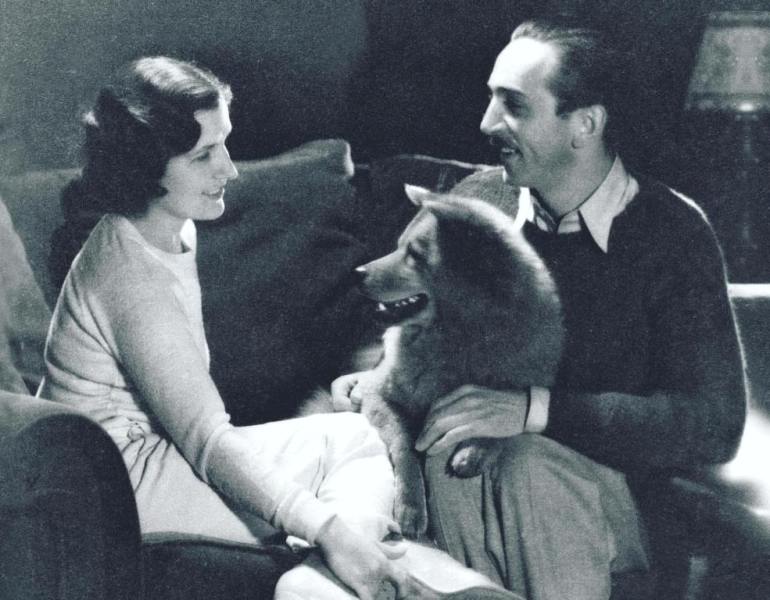
Lilian Disney and Walt Disney with their beloved Chow-Chow dog, Sunnee.
Lilly named the puppy Sunnee, and from that moment on, she adored him, and the they two of them became inseparable! Sunnee brought true joy and happiness to Lillian Disney’s life. This story later inspired a scene in Walt Disney’s classic cartoon, „Lady and the Tramp,” in which Lady emerges from a hatbox as a gift on Christmas morning. The photo shows Lillian Disney and Walt Disney with Sunnee, the Chow-Chow! The photo dates from the late 1920s.
Konrad Lorenz
The world-famous Austrian zoologist, ornithologist, and behavioral scientist Konrad Lorenz was also a devoted owner of this breed. He had countless dogs during his lifetime, including purebred Chow-Chows and Chow-Chow/German Shepherd mixes. One of her chow mix dogs was named Stasi, who was famous for his extreme loyalty. The scientist remembered him in his book „Man and Dog”, describing how Stasi became so attached to him that he even followed his departing master onto the train. Stasi’s story serve to provide a deeper understanding of dog behavior.
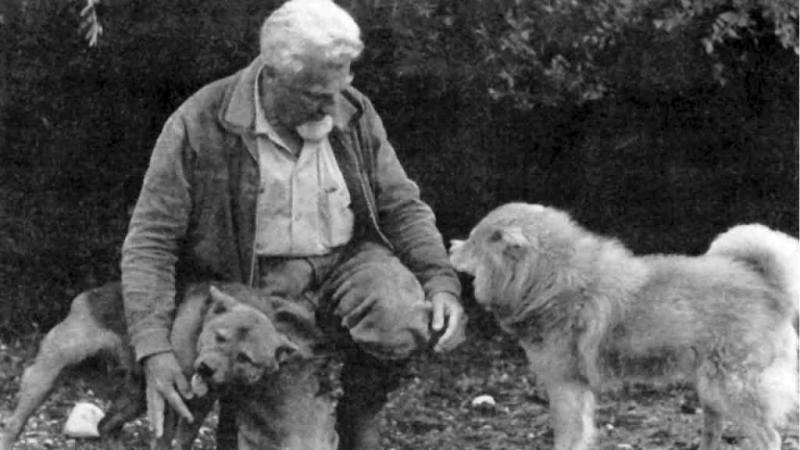
Konrad Lorenz with his Chow-Chow and with Chow mix dog.
Konrad Lorenz was born in Vienna in 1903. He became interested in animals as a child and recorded his observations in his diary. He originally earned a medical degree and later a doctorate in zoology, and his name is known for his scientific work with animals. He wrote popular books based on his observations, which made him known not only in professional circles but also to the general public. As a result of his work, in which he established that animals behave according to inherited movement patterns, Konrad Lorenz is considered the father of ethology (as he called it, „animal psychology”). In recognition of his work, he was awarded the Nobel Prize in Physiology or Medicine in 1973, and died in 1989, at the age of 85.
His most famous work, „Man and Dog”, takes the reader back to prehistoric times, when humans, without dogs living from day to day. It shows how dogs became man’s friend and loyal helper. The instructive anecdotes evoke the world-famous scientist’s former favorites, so that Stasi (the Chow-Chow mix), Susi, and Bully (the bulldog) become almost personal acquaintances. He shares touching descriptions of his observations, which reveal his outstanding knowledge of animal psychology and his boundless like for dogs.
It is essential to understand the history of the breed
As a dedicated owner and responsible breeder of breed, I believe it is essential to understand a breed’s history and original purpose before bringing one into our home. The history of dog breeds tells us a lot about what to expect in terms of temperament, energy level, training, and potential health issues. With an ancient and historic breed like the Chow-Chow, its prehistory is particularly instructive. The Chow-Chow’s past as a hunting dog, guard dog, and working dog in the often harsh conditions of China and Mongolia endowed the breed with characteristics that are still evident today: a strong protective instinct, an independent nature and way of thinking, a certain degree of reserve towards strangers, a powerful physique, and a thick coat adapted to cold climates.
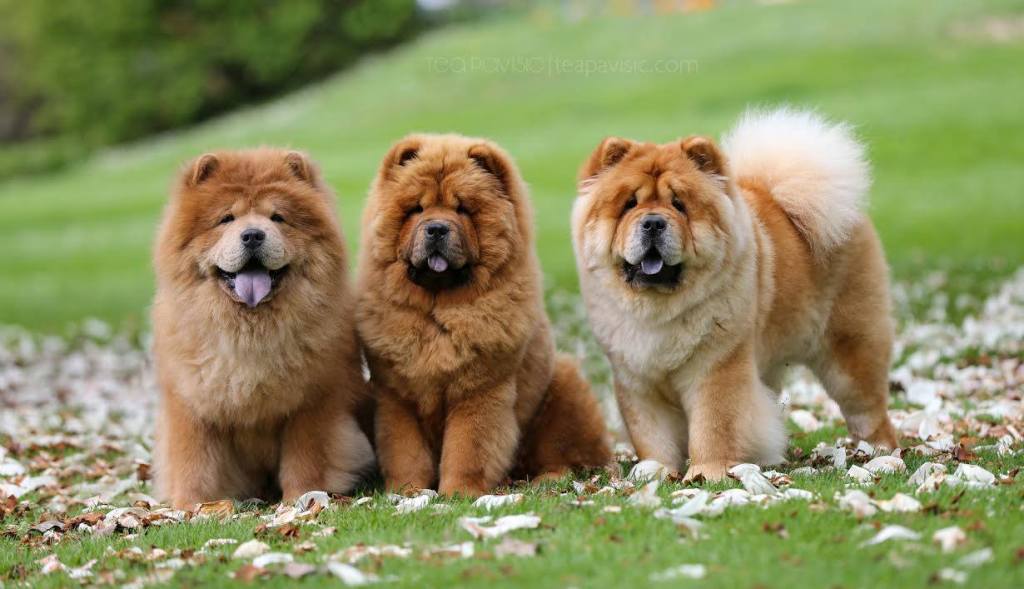
InterChampion Maruso’s Midnight Macho fawn male – Breeder: Ruth Ried Maruso’s Chows ; InterChampion Fergie of Hollywood red female – Breeder: Betty Manea Notorius Star Chow-Chow ; InterChampion Aria Red Střípek snů red female – Breeder: Jaroslava Smištíková Střípek snů kennel – Owner of all three dogs: Zdenka Rupic Last Royalty Chows Slovenia
Of course, not all modern Chow-Chows have the exact temperament of their ancestors from 2,000 years ago. Generations of breeding may have somewhat tempered their deep-rooted instincts, and every dog within a breed has its own unique personality. But understanding the roots of the Chow-Chow working dog can help prospective owners decide if the breed is right for their lifestyle and help them prepare to meet the breed’s needs.
From the perspective of a lifelong Chow-Chow lover
I have had the privilege of being a happy Chow owner for 32 years and a dedicated breeder of the breed for 30 years, and I can attest to its many wonderful qualities. The Chow-Chow is an exceptional family pet, unlike any other because it has a completely different personality than other dog breeds. It has a dignified appearance, proud bearing, independent personality, and refined manners.
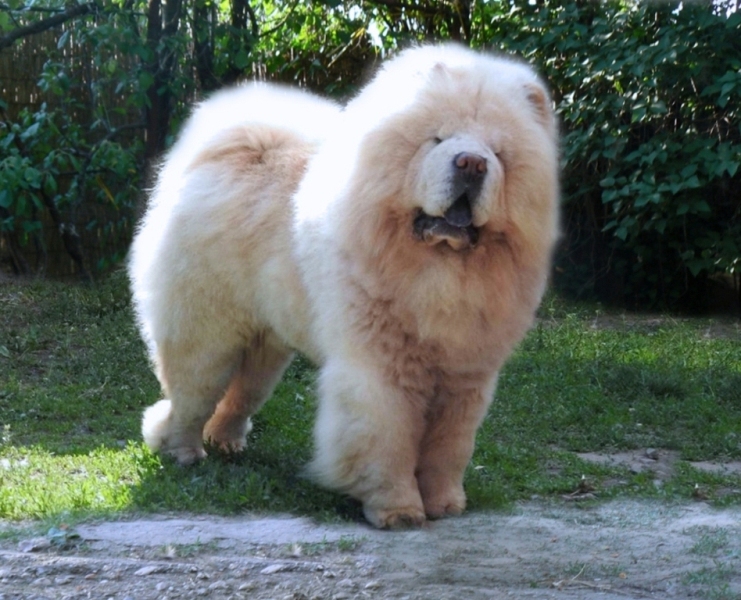
Broken Hill Indiana Jones cream Chow-Chow. Breeder and owner is the Broken Hill’s Heart kennel.
Its love is never overbearing; it shows its devotion in a subtle way: it loves to be close to the family, always and at all times, keeping an eye on us. If it wants a pat or anything else, it comes over and lets us know, then sits or lies down at our feet, and when it gets tired of our company, it retreats to its place. He likes to lean against my legs, and sometimes even sits on them, which is mostly a sign of his affection, love, and unwavering loyalty.
All my dogs are real guardians and protectors. Whether it’s the postman or anyone else, they immediately signal that someone is standing outside the gate and won’t let the visitor in until we go out and invite them in. They always sense and know about the visitor whether they like dogs or not, and they behave with them accordingly.
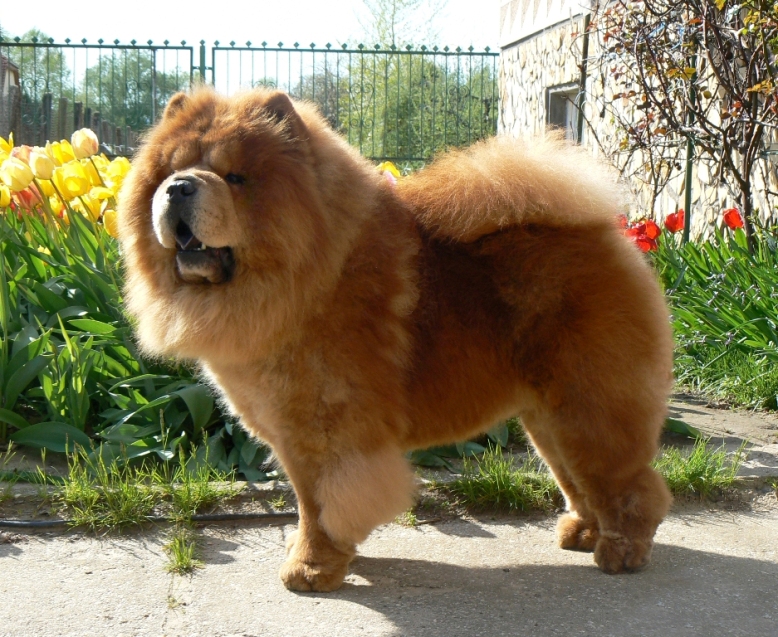
Hungarian Junior Champion, Hungarian Champion, Hungarian Grand Champion Broken Hill Erik red dog.
Their barking and deceptively stern gaze are enough they to scare away any unwanted intruders. On the other hand, they have a knack for quickly learning who the regular visitors are. They keep their distance and don’t rush forward to befriend anyone! They are extremely well-mannered with strangers who are accepted by the family. But they always remain true to themselves, sidestep away from caressing hands, sitting down and to watch them up with their wise Eastern gaze as they assess the situation, decide what kind of wood was it carved from the guest.
The Chow-Chow is not very vocal, has a reserved nature. It is intelligent and quickly assesses a given situation. In imperial China, they guarded palaces, so they know how to express themselves when necessary. They only bark when they have a reason to. This usually happens when they feel that we are in danger or something strange things is happening. They have a strong territorial instinct and will notice even the slightest deviation in their territory and will bark to indicate that something is wrong. There have been a few times when we have misplaced things in the yard or left tools outside and they have indicated that they are in the wrong place. As soon as I brought them back to their place, the barking stopped.
They make different sounds tell me things. Their barking is expressive; they bark differently when visitors come, when they sense danger, when they are happy to see me, when they are happy, when they want to play—each sound is different.
They love to play with balls, with squeaky toy, rope toys, and stuffed animals, and they love to carry them around in their mouths. And when they invite you to play, they do so in an adorably cute pose. When they are very happy, they running round and round on the yard, once, sometimes twice, three times, so it’s better we to stand in a safe place so they don’t knock you over in their rush.
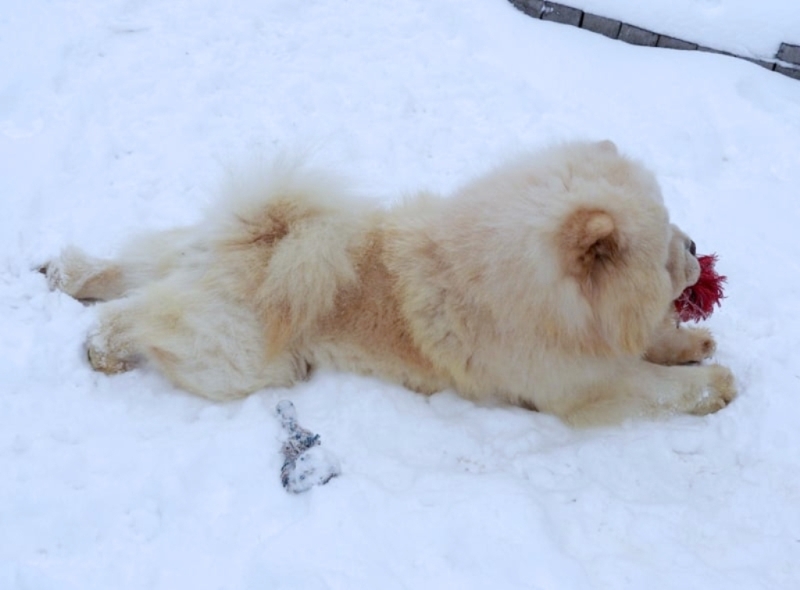
Broken Hill’s Heart Playboy plays in the snow. Breeder and owner is the Broken Hill’s Heart kennel.
They like to be outdoors in dry, cold weather and absolutely adore winter, which is their season. This is when they are truly in their element. Sometimes they feel so good that they lie down in the snow, snow covers them as they lie there, then get up and shake it off their fur. However, be careful not to let them lie in the snow for too long, as they can get sick.
They don’t like loud noises, riotry or shouting; it makes them nervous. At our house, the sound of woodcutting, drilling, chainsaws, and other loud noises always cause them to bark.
They are skillful hunters, they notice even the smallest living thing that I can’t see in the grass. The Chow-Chow considers everything smaller than itself to be prey. Over the years, their skillful hunting skills have resulted in many mice and rats falling victim. They don’t really like cats or strange dogs. The Chow-Chow is too proud to stoop to the level of other dogs. It clearly sets the rules for strange dogs wandering alone on the street also, which in Chow language means, „This is our territory, don’t you dare set foot here, or you’ll be sorry.”
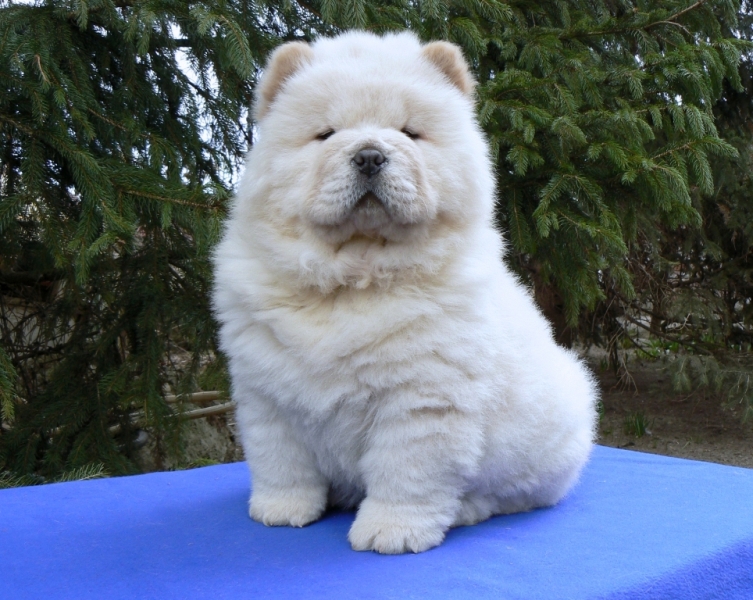
Broken Hill’s Heart Leontina baby (cream female).
The breed has a double coat, which needs to be brushed two to three times a week from puppyhood onwards. It is important to do this with the dog on a table. Coat care begins at the breeder’s, so the puppy will already be used to being brushed on a table. The time spent grooming becomes an intimate moment where it is just the two of you. You can talk to your dog and praise it, which strengthens the bond between your beloved Chow-Chow and you.
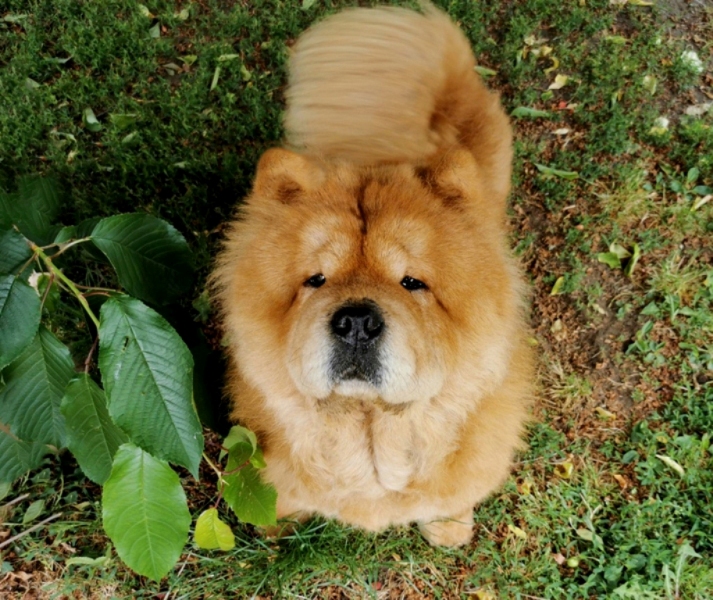
Broken Hill’s Heart Melody looks at me with wide eyes.
They like food, but they are not food-motivated. They are extremely difficult to train because they have more than a millennium of independent thinking in their lineage. As guard dogs, Chows were bred to make decisions about situations in the absence of their humans, and this deeply roted programming is very difficult to influence. Sometimes their stubbornness comes out, the males are generally more stubborn. Positive reinforcement-based learning (with lots of praise) is the right for them, and it should start at an early age, around the time we bring the puppy home. If we teach, raise, care for, groom, play with him and love our Chow-Chow from puppyhood, a strong bond will develop between us, which will deepen so much that our beloved Chow-Chow would do anything for us! Training is made easier by the mutual respect, trust and deep bond between dog and owner!
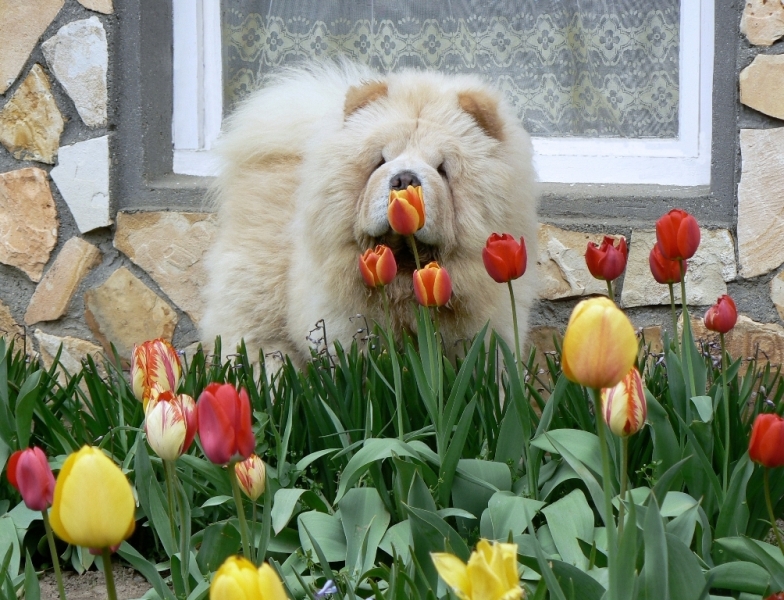
Broken Hill Indiana Jones loves the flowers.
I love Chow-Chow as a breed, I love to dealing with my own Chow-Chow, playing with them, I like to watching them, their behavior in different situations, their relationship with each other.❤️
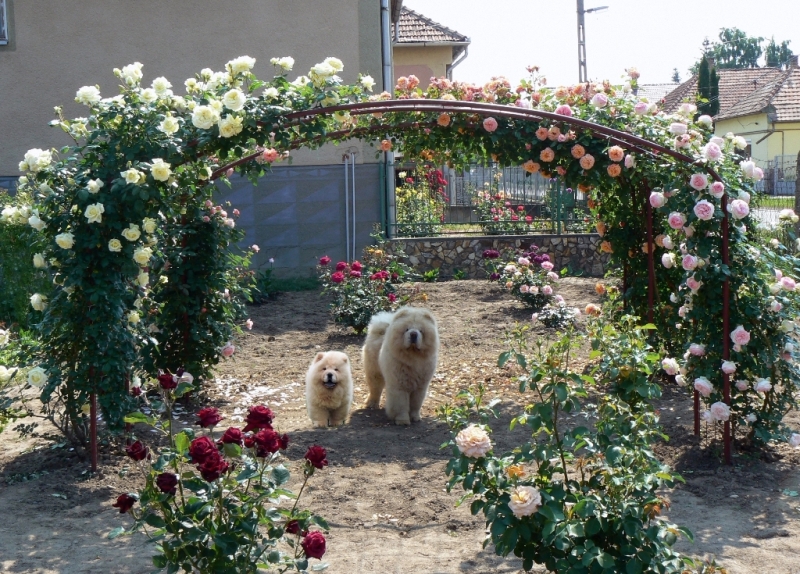
My beloved dogs, Playboy baby and Indiana Jones in our rose garden.
I love that pride that elevates them above the other dogs.❤️ I love their devotion, their guardian and protective instincts, I love their independent thinking and their nature of obstinate when I ask them for something and they do the exact opposite or go after their own heads.❤️ I love the way they sleep, stretched out, snoring, completely motionless, but ready to spring into action at the slightest sound.❤️ I love that they hate bathing and they don’t like to step in the water, and I love that they can be in the snowfall really blissful.❤️
I love the crazy rush they do in their delight and I love when they call me to play they nudge my feet with their noses.❤️ I love it when they come and ask for the caress and then happily move on when they get the love.❤️ I love their special scent, I love to take a smell at their fur and kiss their cheeks, I love their smell of soaked chicken while bathing, I love everything in them!❤️
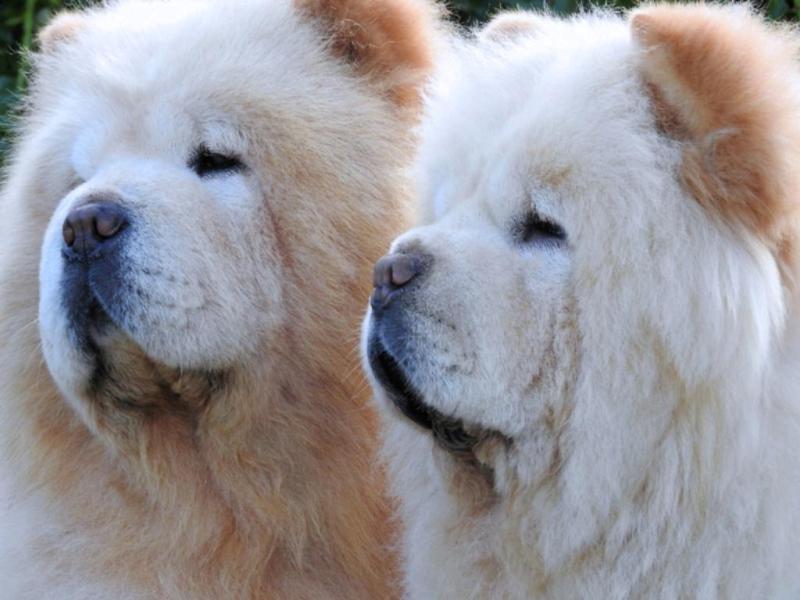
Broken Hill’s Heart Playboy and Nefertiti portrait.
The life with a Chow-Chow is really interesting and exciting, often humorous, kind, promising and very enjoyable. Dear Reader, you can read more about our chow life on my kennel’s website, in the Gallery I. menu item you can read nice and cute stories illustrated with photos, in the News menu item you can also find interesting content, and in the Chow menu item you can read more useful articles about the chow-chow breed.
If you are a Chow-Chow lover, I warmly waiting you in the Broken Hill’s Heart chow-chow kennel Facebook group.😊❤️
You can see nice videos about my wonderful puppies and my big, adult bears on the kennel’s YouTube channel, please check it out too!
A noble past, a responsible present, a conscious future
Understanding the personality traits of Chow-Chows goes beyond on their physical appearance. Their independent nature, unwavering loyalty to their family, dignified demeanor, territorial guarding and protective instincts, reserved behavior toward strangers, and intelligence all contribute to their unique character. As a prospective owner, recognizing and appreciating these traits will allow for a more complete and harmonious relationship with these majestic dogs.
While the Chow-Chow may not be right for every owner and family, those who are given the privilege of sharing their lives with this ancient, regal breed often become lifelong lovers. There is something both humbling and awe-inspiring about caring for a dog whose history stretches back thousands of years, a living link to an era when humans and dogs first formed the unbreakable bond that endures to this day.
The essence of the Chow we hold dear today endures because of the dedication of these early breeders, their vision, and their stewardship of the standard. This history is a time capsule, but one that should never be buried too deeply. It must be opened, admired, and remembered if we are to carry its lessons forward. Every liiter we breed, every choice we make adds another brushstroke to this living masterpiece. As we look to the future of the Chow-Chow, it‘s vital that breeders work to preserve the best of the breed‘s traits while minimizing inherited health issues. Owners and potential owners must educate themselves on the breed‘s needs and quirks, and be prepared to provide the training, socialization, and care about these special dogs require.
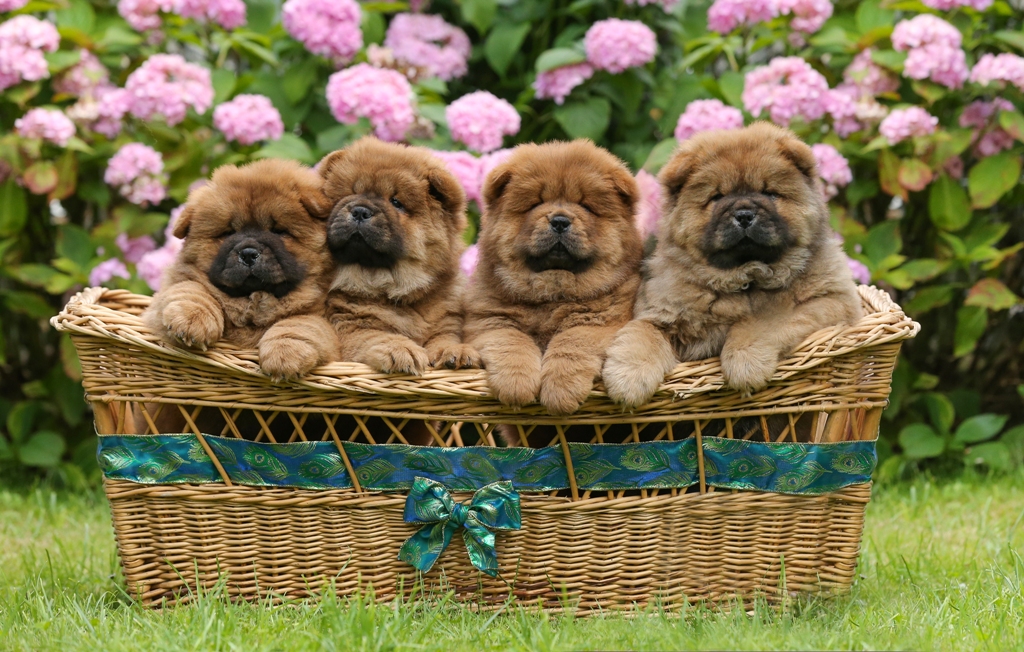
The Last Royalty kennel „C” litter’s puppies: Last Royalty Coco Chanel & Last Royalty Charming Cindy & Last Royalty Cute Carmen & Last Royalty Cuddly Chiara, Breeder: Zdenka Rupic Slovenia
With knowledge, and a deep respect for their history, we can ensure that the magnificent Chow-Chow continues to thrive as a beloved companion and a living testament to the enduring partnership between humans and dogs. Through the ages and across the miles, from the palaces of ancient China to the living rooms of modern homes, the Chow-Chow abides – a noble, ancient, and utterly unforgettable breed.❤️
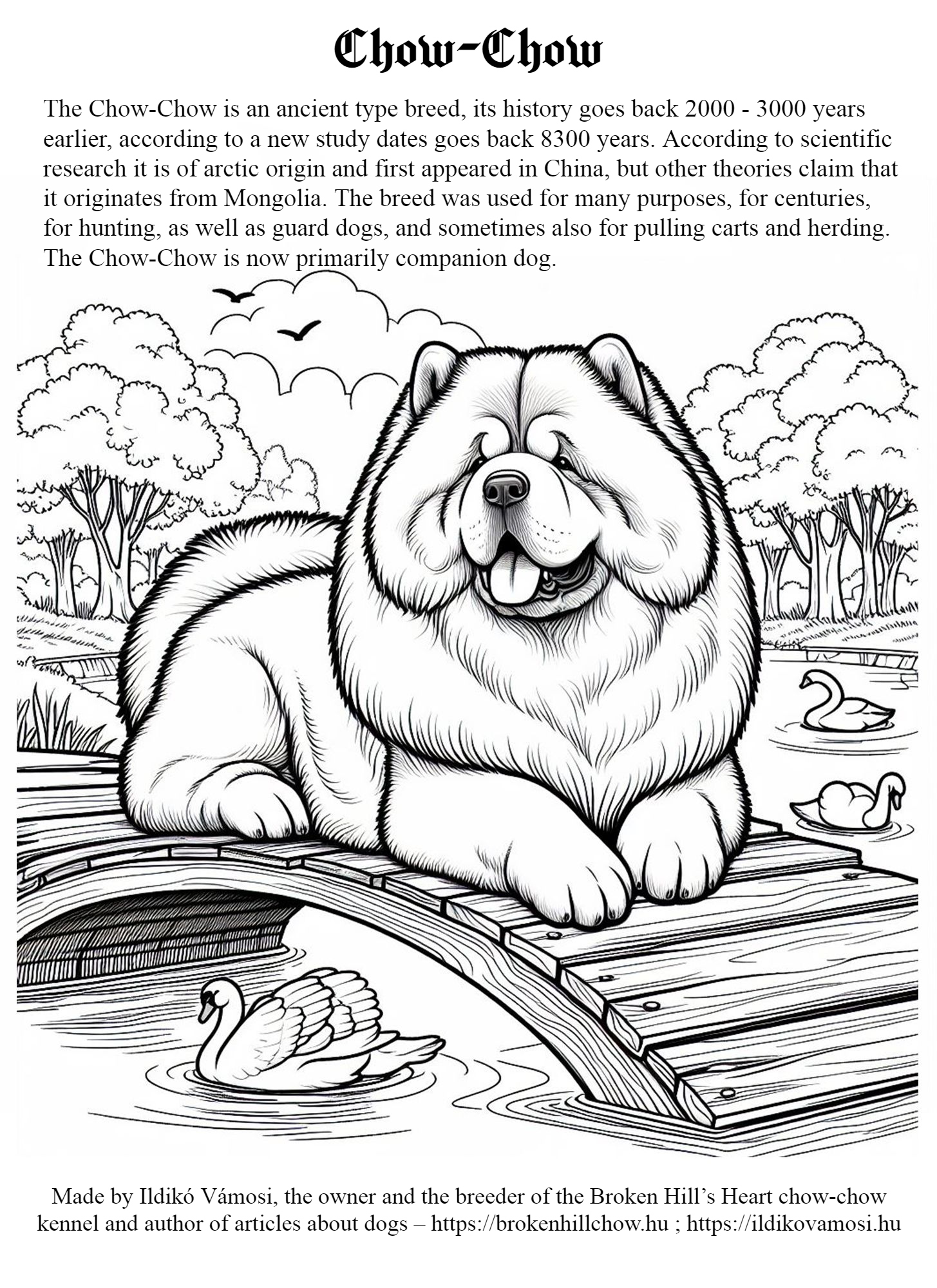
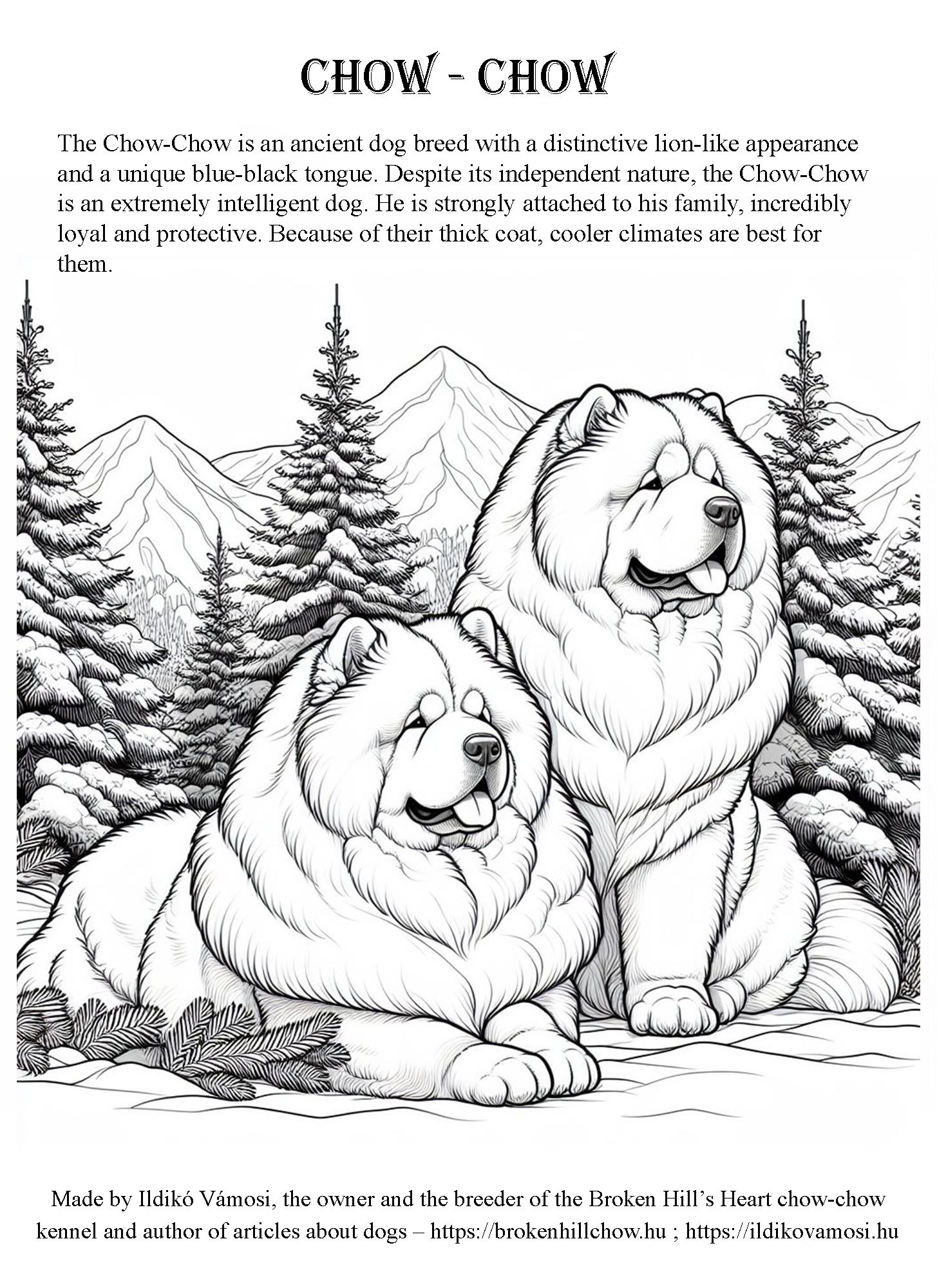
I’m happy to share the following two Chow-Chow coloring pages with children and creative adults who love to draw and color. Click on the image to download it. When the coloring page appears in full size, right-click, select “Save Image As,” then click “Save,” and you’re all set. Print out the downloaded image, and let the coloring begin! Have fun!
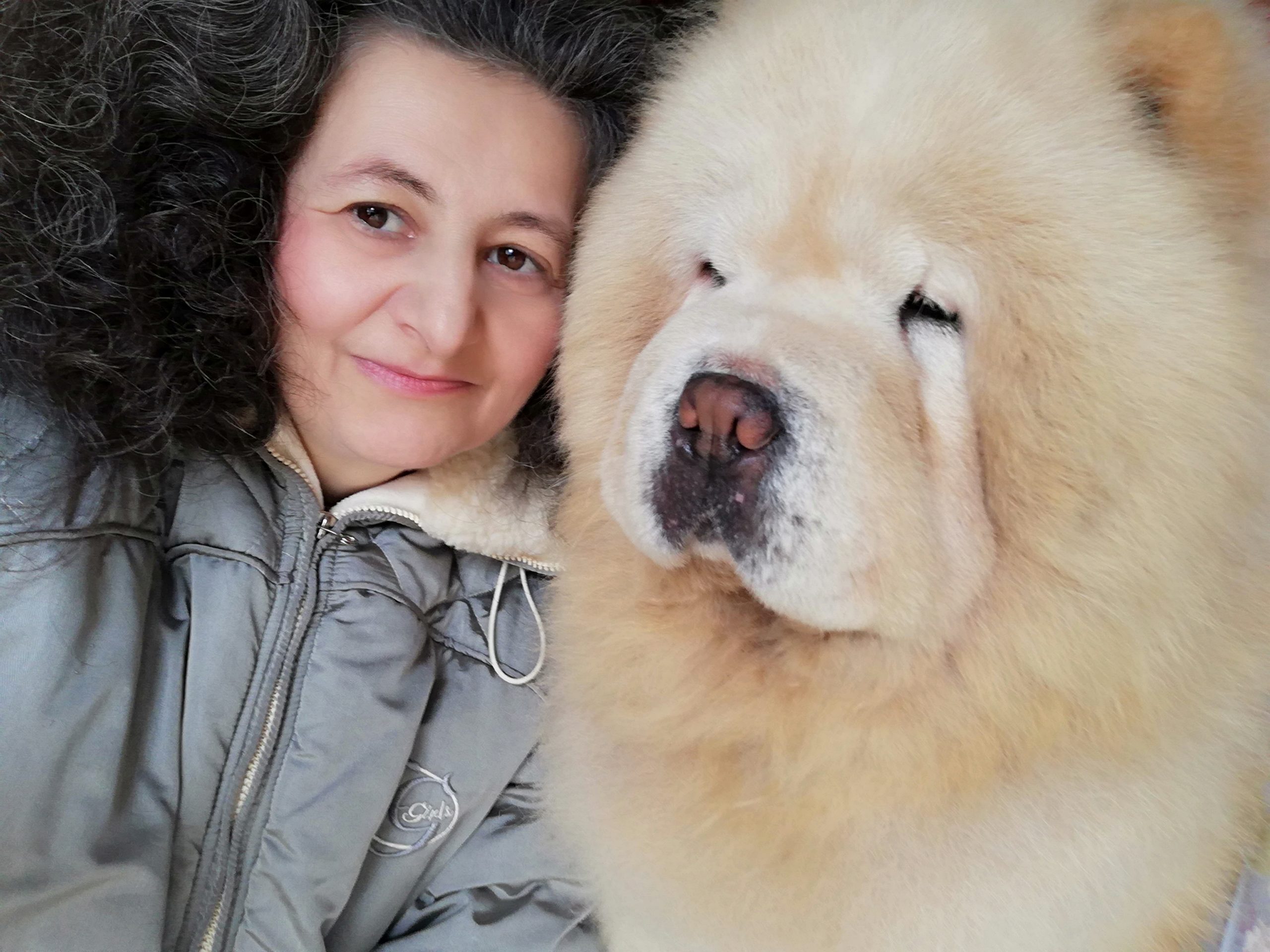
Dog in main photo:
Multi Champion Pull and Bear De La Yakka fawn Chow-Chow male
Breeder: Lorena Cerezales Los Saldenos kennel
Owners: Betty Manea and Irimie Lovas Notorius Star kennel
Acknowledgements:
Thank you to Sandra Miller, the owner of the ChowTales archive, for her dedicated work in tracing the breed’s past! Thank you for sharing her extensive collection with the general public, all dear Chow fans, so that we can gain insight into and benefit from many useful archival documents, see interesting archival photos, learn a lot of interesting information about the history of the Chow-Chow breed, and thus enrich our knowledge.
Thank you to Bernice Leroy, owner and breeder of Ciao Chows, operator of the Chow Chow Africa information website and YouTube channel, for her useful and valuable articles and videos related to the Chow-Chow breed. We can all gain a lot of useful and interesting information from them. Thanks for allowing the use of the images „Chow-Chows in Imperial China” and „Chow-Chow dogs in Lamaist monasteries” as illustrations in the article.
I would like to thank historian János Makó, owner of the Hungarian Dog History Collection, for allowing me to use the archive photos from his collection for the history of the breed in Hungary!
I would like to thank Betty Manea and Irimie Lovas, owner and breeder of the Notorius Star kennel, Borbála Tóth-Papp, owner and breeder of the Balcsi kennel, Nanni Rosolia, owner and breeder of the Italian Bon Bon Bleu kennel, and Zdenka Rupic, owner and breeder of the Slovenian Last Royalty kennel, for the photos of their wonderful Chow-Chow dogs, with which I illustrated the article!
Dear reader! Thank you for reading this article, I hope it was helpful to you!🙂 Please share this post with your Chow-Chow fan friends, acquaintances, and other dog lovers, so that they too can get to know this ancient dog breed! Thank you!🙂
🙂 ❤️ I am waiting with useful and valuable articles for dog lovers to my official authoring website, owners of pet dogs, breeders, exhibitors and everyone, who loves the dogs! 😊❤️
Please visit often my official website:
https://ildikovamosi.hu
🙂 Thank you for your honorable visit! 🙂